PaniniXchange
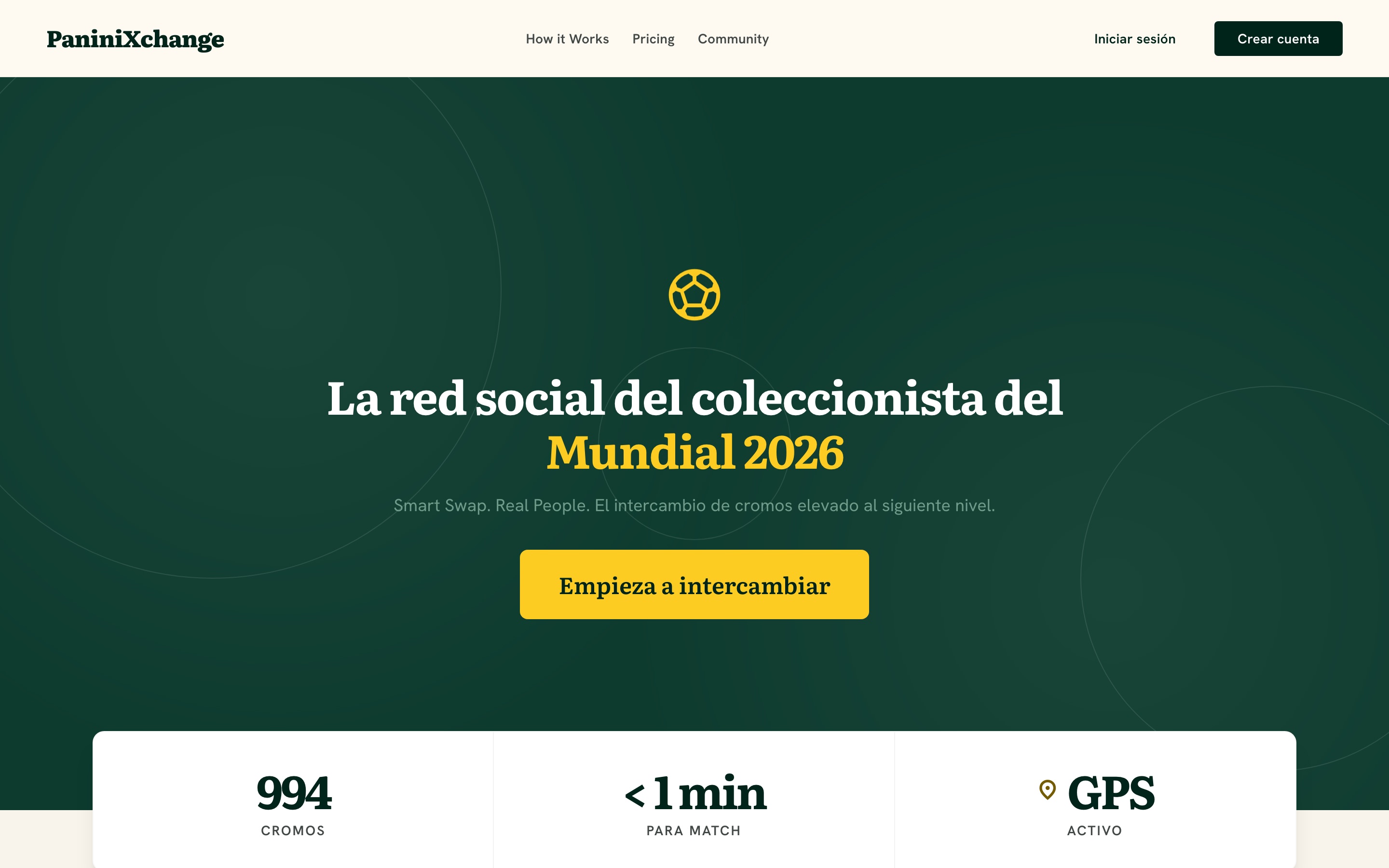
The social network for World Cup 2026 sticker collectors.
- React · Vite · Tailwind CSS · React Router · Python · FastAPI · SQLModel · PostgreSQL · Stripe · Leaflet
- Live
OVERVIEW
PaniniXchange connects nearby collectors to swap stickers from the 2026 World Cup Panini album. You log how many copies you own of each of the 994 stickers; a radar finds collectors where a swap helps both sides, and a negotiation table takes the trade from invitation to a close both people confirm. Reviews from real trades build each collector's reputation.
WHAT I FOUND → WHAT I DECIDED
- A swap is only worth making if both people get stickers they're missingThe matcher keeps only two-way trades and scores compatibility on how balanced and how large they are
- Either side could change the offer after the other had agreed to itAny edit resets both confirmations; the trade only seals once both confirm the same table
- Swapping stickers means meeting someone you don't knowA partner's phone number is revealed only after the trade is completed
WHAT IT DOES
- All 994 stickers in a grid with search and filters; copies update instantly and roll back if the save fails.
- Compatible collectors on a map, ranked by compatibility, with the distance to each.
- Invite, negotiate on a shared table, suggest stickers from the other side, and confirm together.
- Ratings from completed trades feed points, levels and badges on each profile.
- Pro and Legend memberships through Stripe.
HOW IT WAS BUILT
Designed as five business flows on one relational model — sign-up, album, radar, trade and reputation — each documented with its tables, endpoints and rules before being built. A React app on Vercel talks to a FastAPI service and PostgreSQL on Railway; development runs on SQLite, so the only difference between environments is configuration.
SCREENS
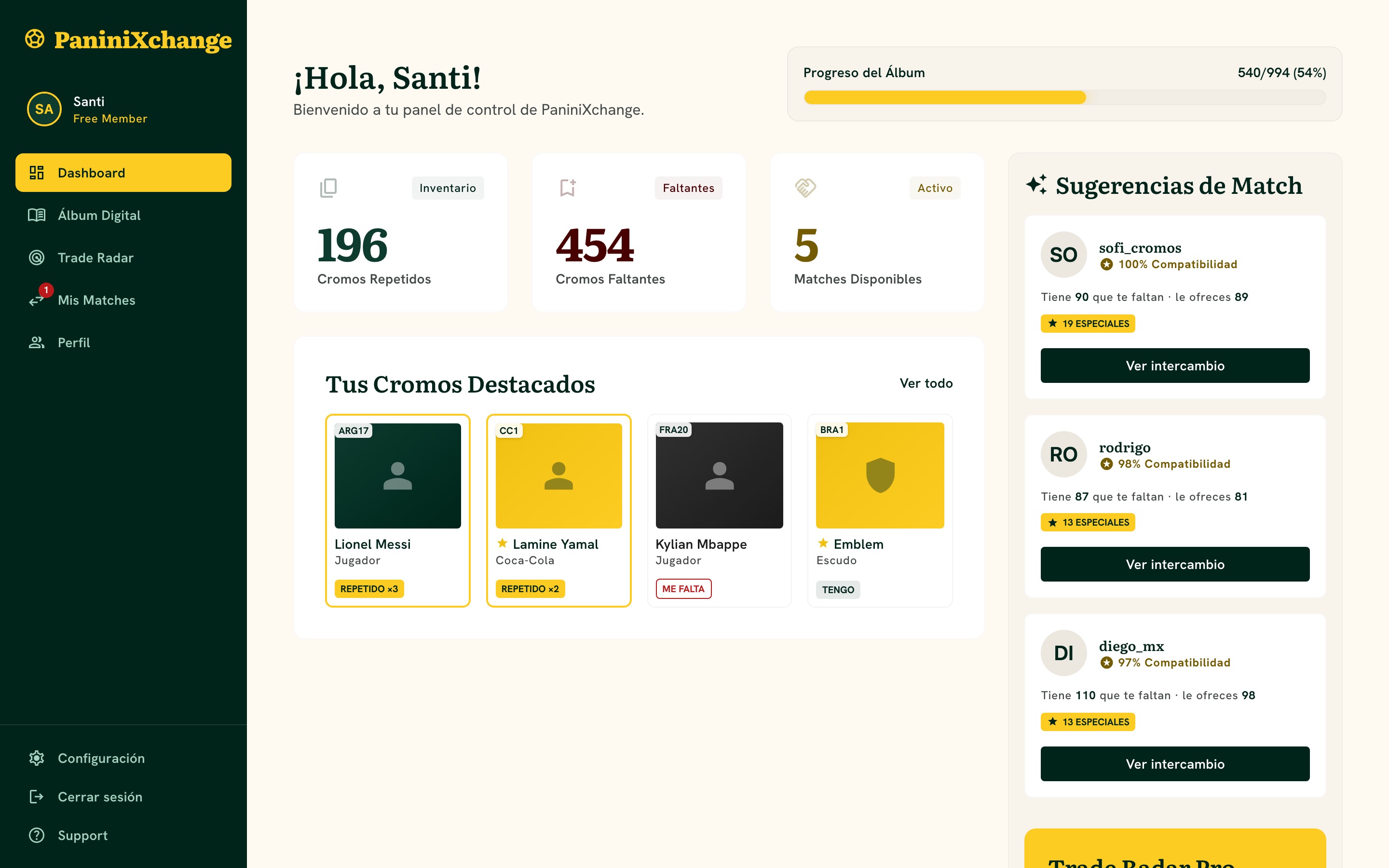
Dashboard: album progress and the best matches 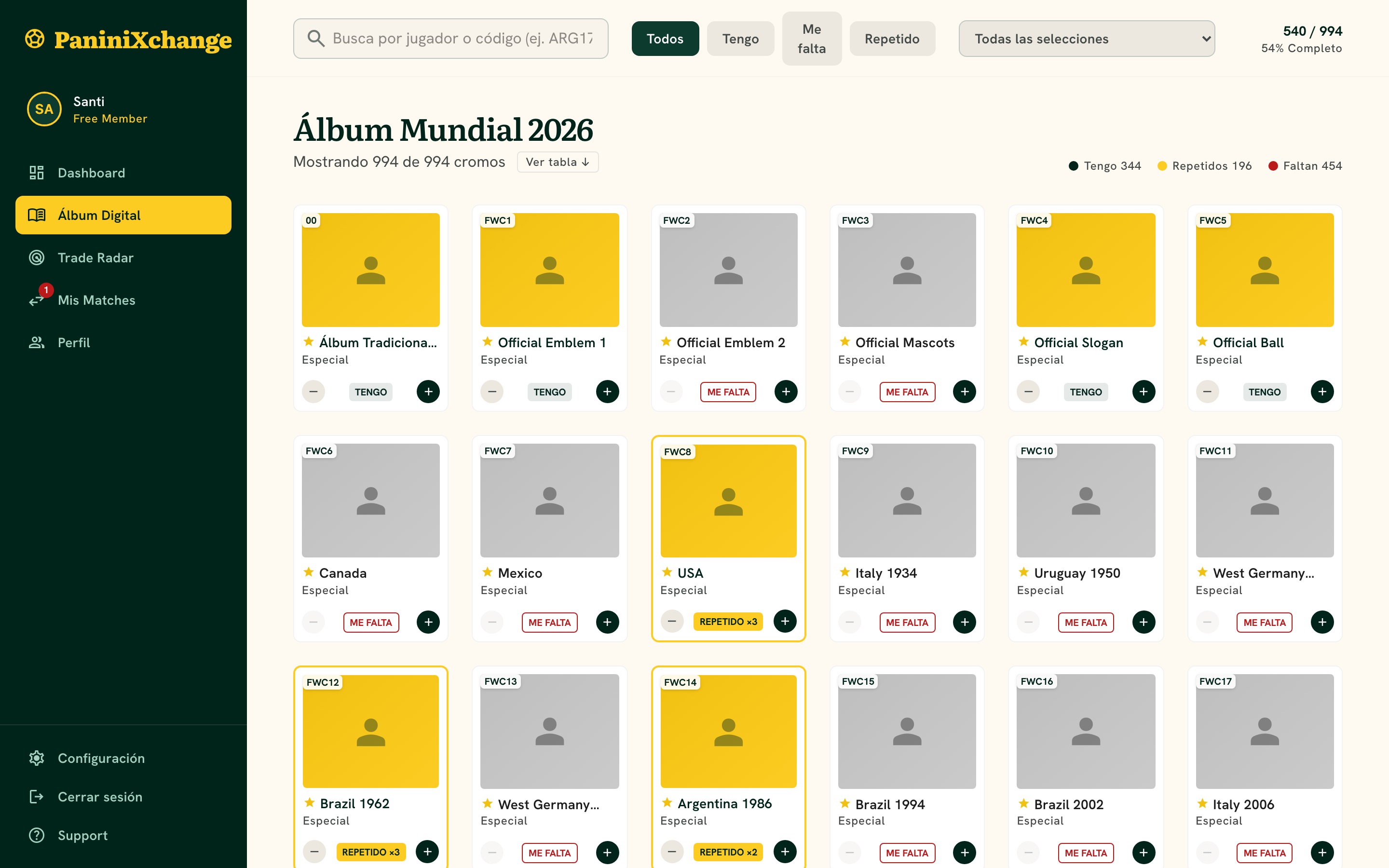
The album: 994 stickers, filtered by what you have, lack or repeat 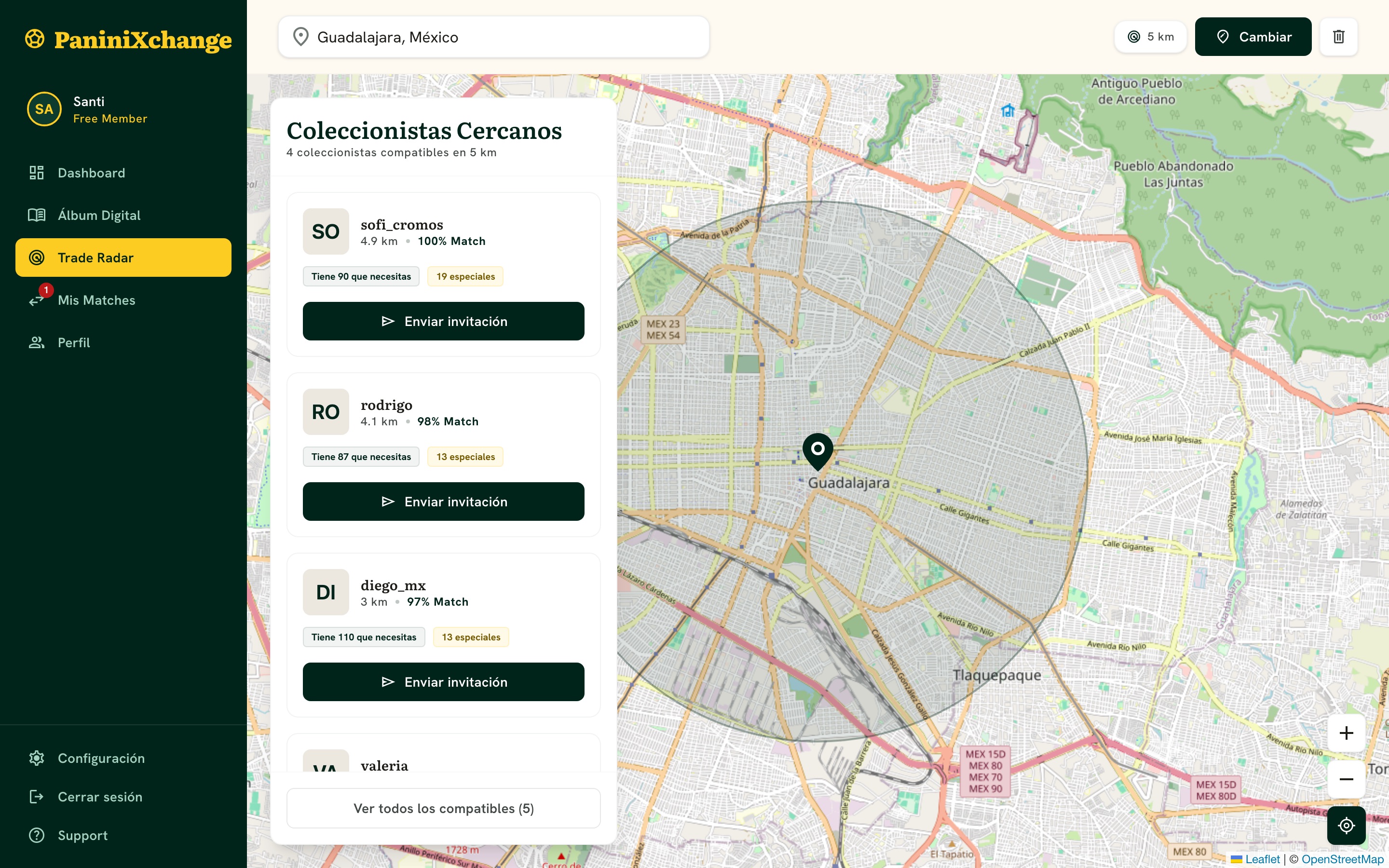
Radar: compatible collectors within 5 km 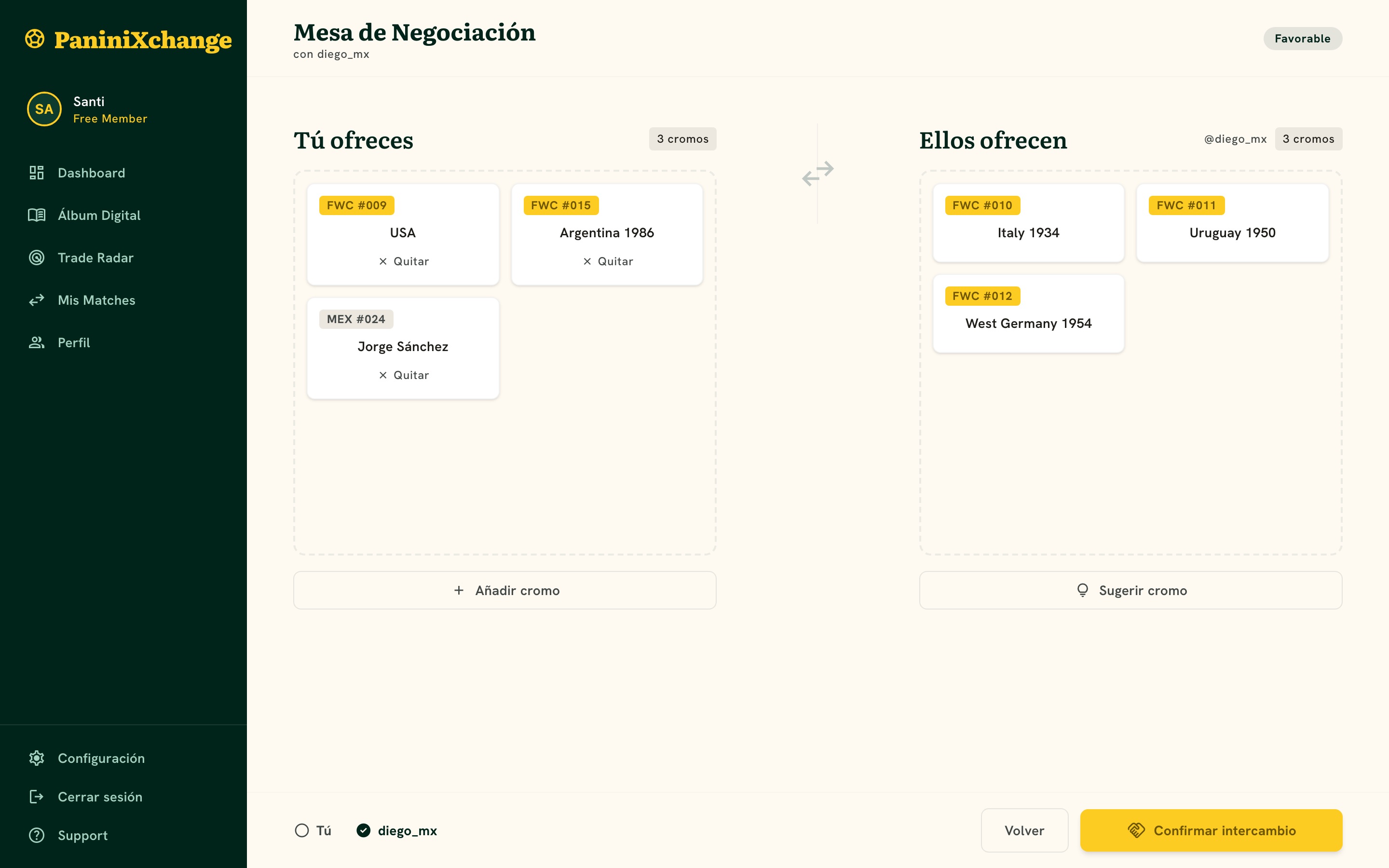
Negotiation table, waiting on one confirmation 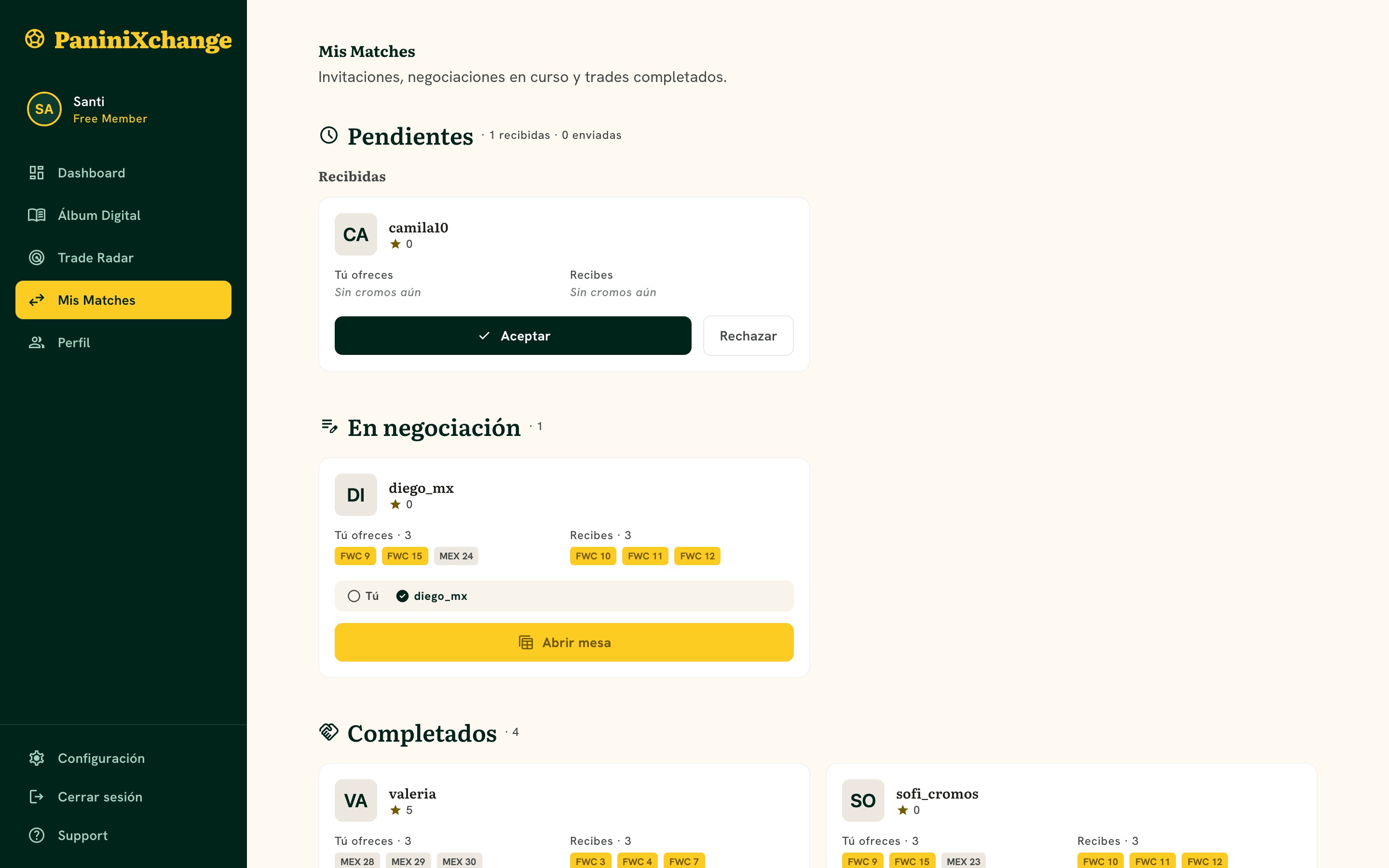
Invitations, trades in progress and completed swaps 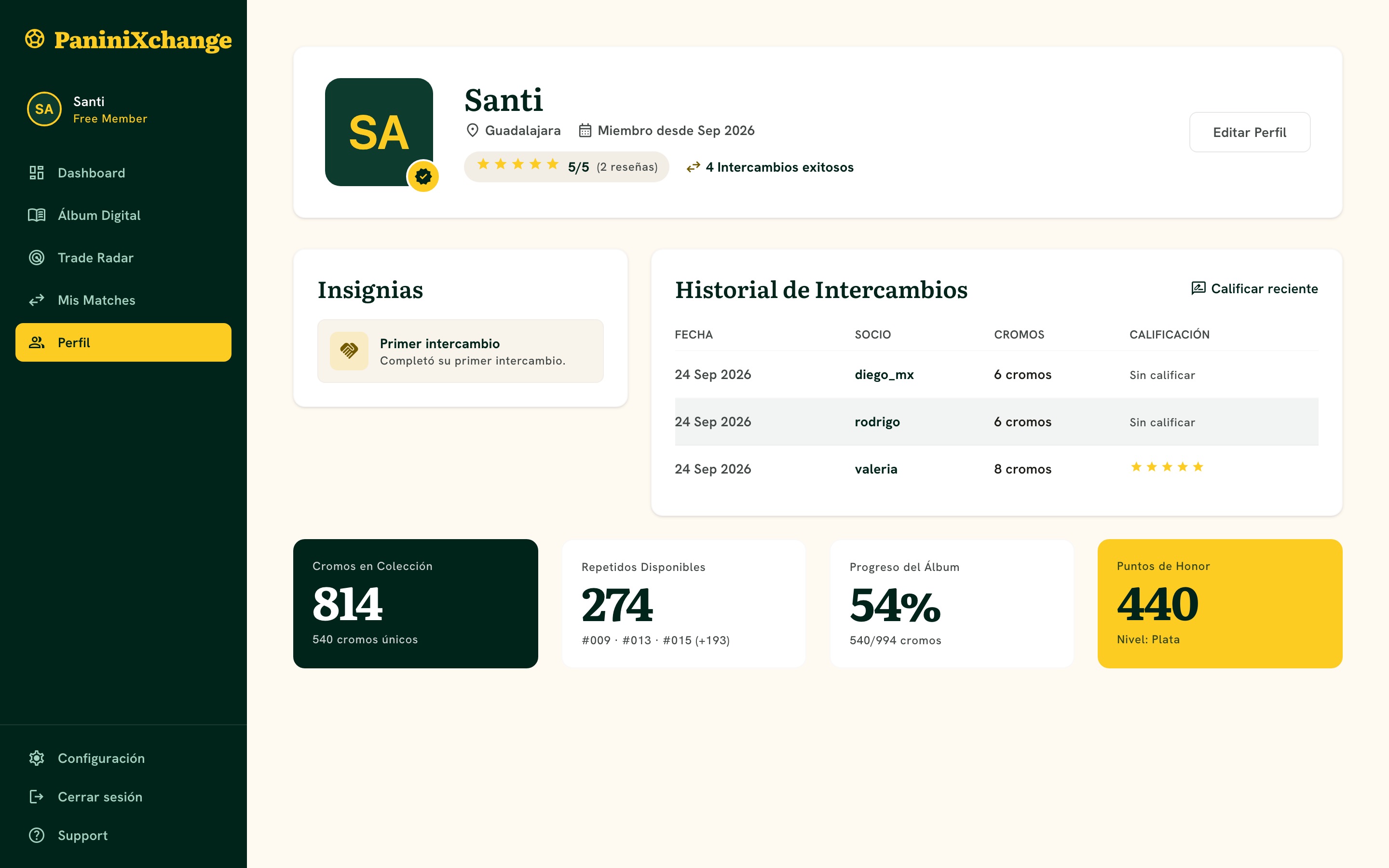
Profile: rating, badges, history and honour points 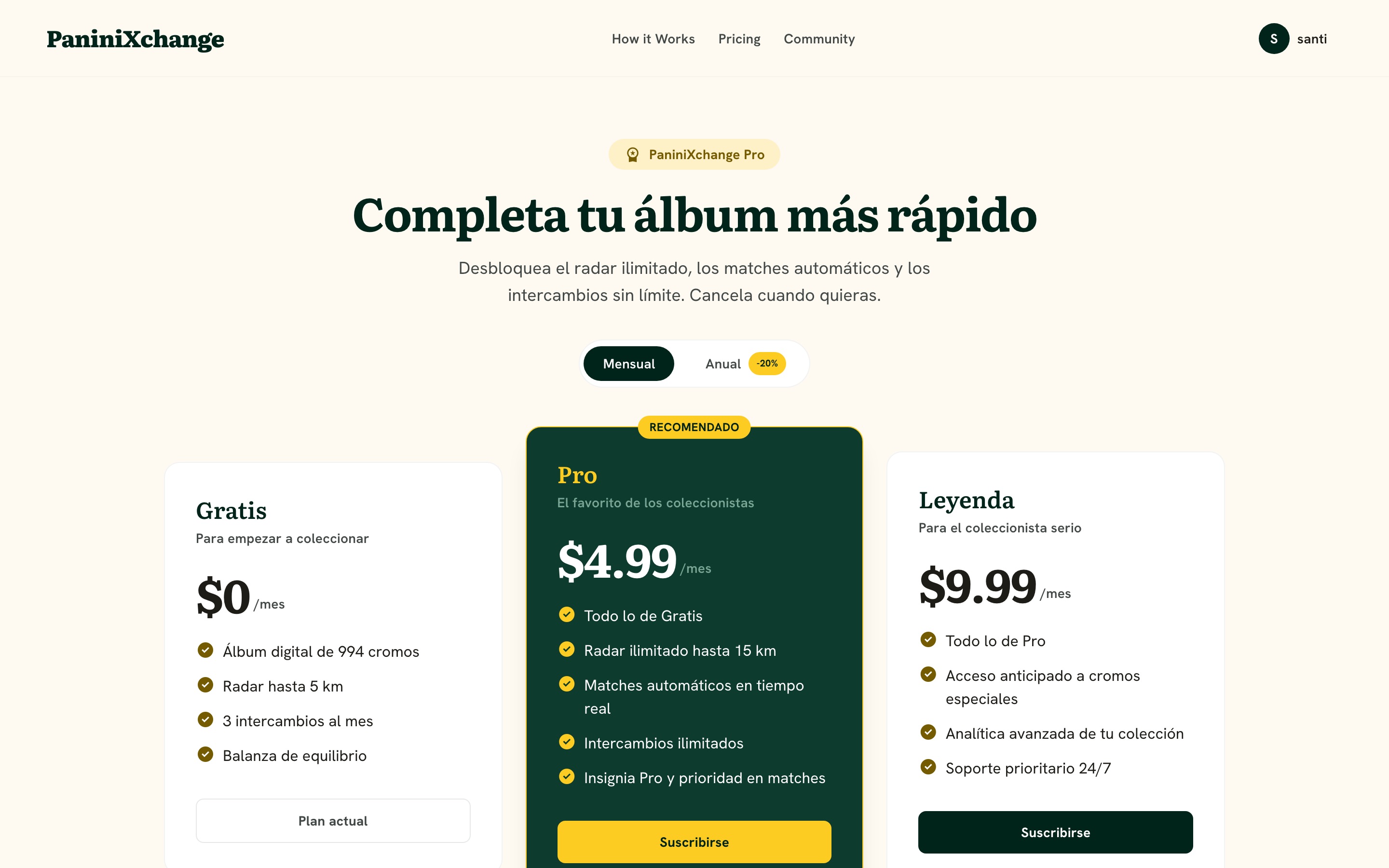
Pro and Legend plans through Stripe